Few shipwreck discoveries combine history, treasure, and numismatics quite like the story of El Cazador. Lost in the Gulf of Mexico in 1784 and rediscovered more than two centuries later, the wreck yielded hundreds of thousands of Spanish silver coins—many of which are now collectible artifacts available to modern collectors. For numismatists, El Cazador coins represent a remarkable opportunity: genuine pieces of colonial history that once lay on the ocean floor and were part of a shipment that may have changed the course of American history.
The Voyage of El Cazador
The Spanish brig-of-war El Cazador departed Veracruz, Mexico on January 11, 1784, bound for New Orleans. Its cargo was extraordinary—approximately 450,000 silver reales, primarily minted in Mexico City during the reign of King Charles III.
Spain was sending this massive shipment of silver coins to Louisiana in an attempt to stabilize the colony’s struggling economy. At the time, Spanish Louisiana was experiencing severe financial problems and shortages of currency.
Unfortunately, the ship never reached its destination. El Cazador disappeared somewhere in the Gulf of Mexico, along with its enormous cargo of silver.
A Discovery Two Centuries Later
For over 200 years, the fate of El Cazador remained a mystery.
Then in August 1993, a commercial fishing trawler named Mistake, operating out of Mississippi, accidentally snagged something heavy in its nets about 50 miles south of New Orleans. When the crew hauled the nets aboard, they were stunned to find them filled with old silver coins dated 1783 and minted in Mexico.
The nets had caught the remains of the long-lost shipwreck of El Cazador.
Thousands of coins were eventually recovered from the site, confirming that the vessel had been carrying massive quantities of Spanish colonial silver.
The Coins of El Cazador
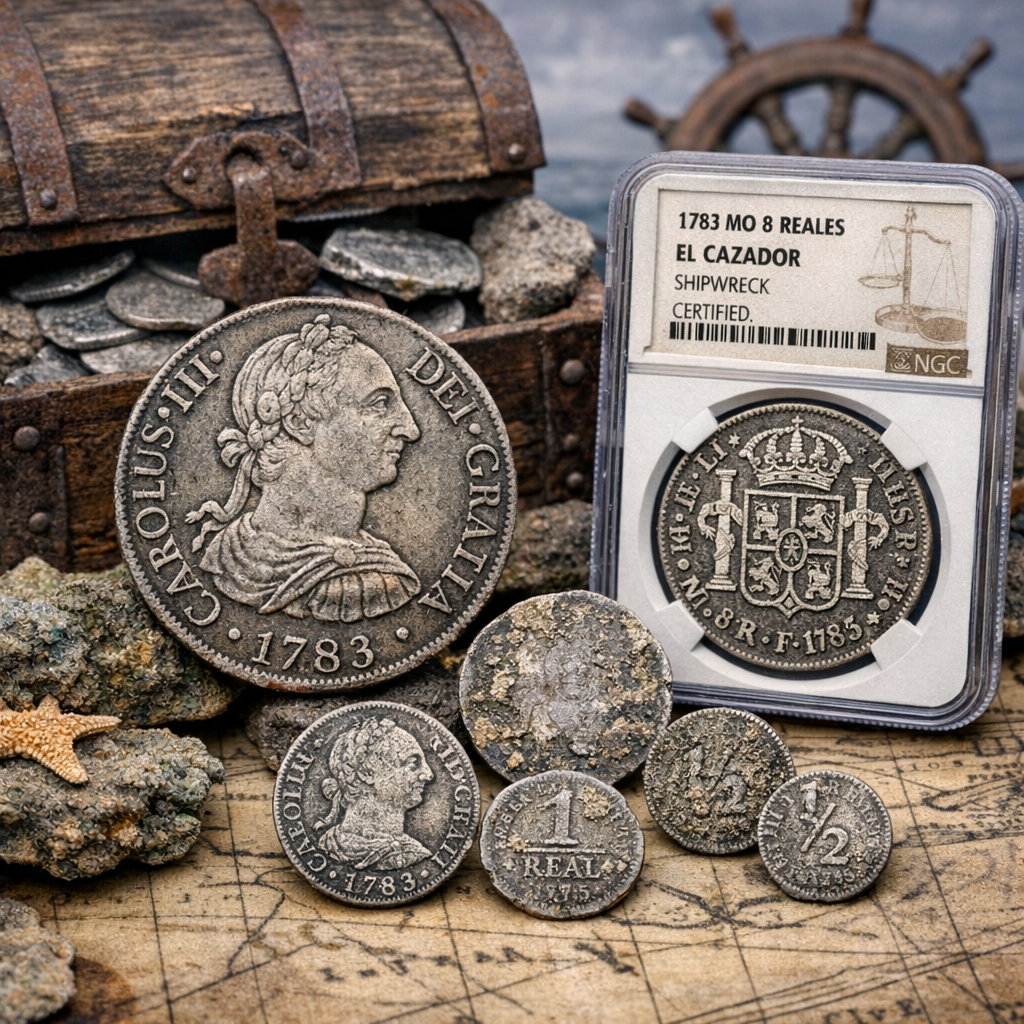
Most of the coins recovered from the wreck were Spanish colonial silver reales minted in Mexico City in the early 1780s. The majority date from 1783, just one year before the ship sank.
Common denominations recovered include:
- 8 Reales (Pieces of Eight) – the famous Spanish silver dollar used worldwide in trade
- 4 Reales
- 2 Reales
- 1 Real
- ½ Real
These coins typically feature:
- A bust of King Charles III on the obverse
- Spanish royal arms on the reverse
- The Mexico City mint mark (Mo) and assayer initials
- Dates primarily from 1782–1783
The 8 reales coin, often called the “Piece of Eight,” was one of the most widely used currencies in the world during the 18th century and heavily influenced the development of the U.S. dollar.
Condition and Appearance
Because the coins spent more than two centuries underwater, most El Cazador coins show evidence of ocean exposure. Typical characteristics include:
- Saltwater corrosion or patina
- Surface roughness
- Toning from marine minerals
- “Shipwreck effect” texture
While they may not have the pristine surfaces of freshly preserved coins, these characteristics actually enhance their appeal to many collectors, who value the authenticity and story behind the artifacts.
Certification and Authenticity
Many El Cazador coins are certified by grading services such as:
- NGC (Numismatic Guaranty Company)
- ANACS
These coins are usually labeled “El Cazador Shipwreck” or “Shipwreck Effect”, confirming their origin from the famous wreck site.
A certificate of authenticity or shipwreck designation adds historical significance and helps assure collectors of the coin’s provenance.
Value of El Cazador Coins
The value of El Cazador coins depends on several factors:
- Denomination
- Condition and detail
- Certification
- Eye appeal
Typical collector ranges today include:
- ½ Real – $60 to $150+
- 1–2 Reales – $100 to $250+
- 8 Reales – $200 to $400+ depending on grade
Higher-grade examples or coins with exceptional detail can command significantly higher prices.
📈A Shipwreck That May Have Changed History
The loss of El Cazador had consequences beyond numismatics.
Without the much-needed silver shipment, Spain struggled to maintain control of Louisiana. Eventually Spain returned the territory to France, and in 1803 the United States purchased Louisiana from Napoleon, doubling the size of the young nation in the famous Louisiana Purchase.
In that sense, the sinking of El Cazador may have indirectly helped shape the future expansion of the United States.
Why Collect El Cazador Coins?
Collectors are drawn to El Cazador coins for several reasons:
- Authentic 18th-century shipwreck treasure
- Connection to Spanish colonial history
- A tangible link to the Age of Sail
- Relatively affordable shipwreck coins
Unlike some shipwreck coins that sell for thousands or even tens of thousands of dollars, El Cazador coins remain accessible to collectors who want to own a genuine artifact from a historic maritime disaster.
A Piece of History from the Ocean Floor
More than two centuries after El Cazador vanished beneath the waves, its cargo continues to fascinate historians and collectors alike.
Each coin recovered from the wreck represents a small piece of a much larger story—one involving colonial empires, international trade, and a ship that disappeared while carrying the financial lifeline of a struggling colony.
Today, owning an El Cazador coin means holding a real artifact of that history—silver that once lay hidden on the floor of the Gulf of Mexico for over 200 years.
📌 Bottom Line
As of February 9, 2026, the silver market remains in a dynamic and volatile phase. Prices are elevated compared with historical levels but have pulled back from recent peaks. The overall outlook continues to reflect a complex interplay of industrial demand, macroeconomic sentiment, supply constraints, and investment flows — making silver both a compelling and challenging market for traders and long-term holders alike.