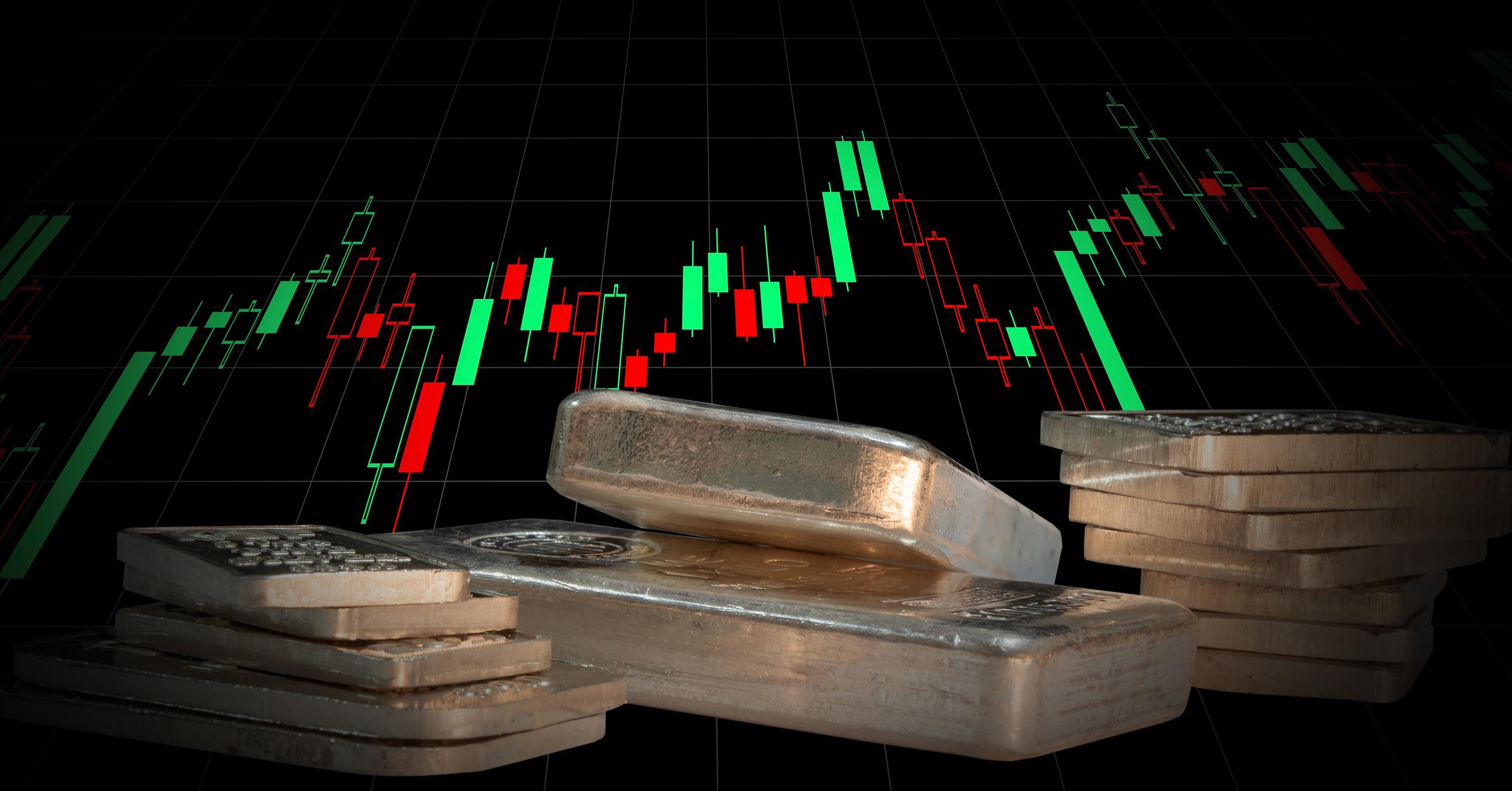
Earlier in the year, silver briefly touched new nominal highs above $120/oz — a level not seen in decades — before pulling back amid broader market shifts. This mix of sharp rallies and steep corrections has characterized the start of 2026.
📉 Volatility: Rally, Crash, & Rotation
The silver market has exhibited high volatility as investors reassess positions:
- Strong rallies tied to macro uncertainty and safe-haven demand drove prices to multi-year peaks.
- Corrections have been large and sudden — including a sell-off that wiped out recent gains and pushed silver back toward the $80/oz area.
- Some commentators describe these price swings as part of a healthy retracement rather than a structural reversal.
This turbulence reflects the dual nature of silver — both a precious metal and an industrial commodity — making it sensitive to shifts in investment sentiment and broader economic data.
🪙 Macro Drivers Impacting Silver
Several key forces are shaping the market today:
📌 1. Safe-Haven & Monetary Dynamics
Uncertainty in global markets — including interest rate expectations and currency moves — has pushed some investors toward precious metals. As gold rallies on weaker dollar or risk-off flows, silver often participates strongly.
📌 2. Industrial Demand
Silver’s industrial use (in solar panels, electronics, EVs, and AI technologies) continues to provide structural support. This demand category now accounts for a large share of total silver consumption, differentiating it from gold.
📌 3. Supply Constraints
Global supply has lagged demand for years, with multiple reports of structural deficits persisting into 2026. Limited new mining capacity and production challenges contribute to tightening fundamentals.
📌 4. ETF & Investment Interest
Silver-linked ETFs and retail investment products have seen strong inflows, sometimes outpacing gold ETFs in performance, underscoring rising investor appetite.
🔌 Industrial Demand: Tech & Energy Driving Growth
Unlike gold, silver has significant industrial use, and this is a key source of demand:
- Silver’s unique electrical and thermal conductivity makes it essential in solar panels, electric vehicles, semiconductors, and AI/data center hardware — all rapidly expanding sectors.
- Expansion of renewable energy infrastructure — particularly solar capacity — alone could consume millions of additional ounces annually.
This deep industrial demand differentiates silver from typical precious metals, tying its price to real-economy growth as much as investment flows.
💰 Investor Behavior and ETF Activity
Investor interest has been both a catalyst and a source of volatility:
- Record inflows into silver-backed ETFs pushed silver toward multi-year highs late in 2025 and into 2026.
- However, recent days have seen sharp ETF outflows and heightened volatility, especially in Indian markets where silver ETFs dropped up to 20% in early trading.
- Some retail traders are taking profits or reducing exposure after the big run-up, while institutional and overseas participants hold firm.
Overall, investor behavior is a mixed signal: strong overall interest, but growing short-term profit-taking and rotation.
🌍 Geopolitical & Macro Drivers
Silver’s surge hasn’t occurred in a vacuum — macro forces are also at work:
- Geopolitical tensions and risk aversion have buoyed safe-haven demand for precious metals broadly.
- Expectations of potential monetary easing (lower interest rates) support precious metals by reducing opportunity costs.
- Divergences in pricing between U.S. and Chinese markets — including a persistent Shanghai silver premium — reflect regional demand imbalances and physical scarcity.
📈 Analyst Views & Forecasts
Forecasts for silver in 2026 remain divergent and scenario-dependent:
- Some analysts and models suggest silver could continue its upward trend, potentially revisiting highs if demand and safe-haven interest remain strong.
- Others view the recent price pullbacks as technical resets that could set the stage for renewed rallies later in 2026.
- Bullish scenarios have even entertained silver testing significantly higher ranges, though reaching extremely elevated levels (e.g., ~$200/oz) requires a convergence of unusual market conditions.
Many forecasters emphasize that silver’s larger price swings — compared with gold — reflect its smaller market size and stronger link to economic activity.
🧭 Where the Market Stands Today🧠 Market Sentiment & Positioning
Investor mood is mixed:
- Some traders are taking profits or hedging, especially after the rapid run-up and subsequent correction.
- Others see ongoing structural demand and supply tightness as bullish long-term drivers.
- Corporate responses — such as jewelry makers shifting away from silver to reduce exposure to volatility — illustrate how price swings are influencing real-world demand decisions.
🧭 What to Watch Next
Catalysts likely to move the silver market over the coming months include:
Supply reports from mining bodies and inventories on exchanges like COMEX.
U.S. economic data and inflation trends, which influence real yields and safe-haven demand.
Fed interest rate expectations, which can shift relative attractiveness versus hard assets.
Industrial growth data, especially in renewables and technology sectors.
📌 Bottom Line
As of February 9, 2026, the silver market remains in a dynamic and volatile phase. Prices are elevated compared with historical levels but have pulled back from recent peaks. The overall outlook continues to reflect a complex interplay of industrial demand, macroeconomic sentiment, supply constraints, and investment flows — making silver both a compelling and challenging market for traders and long-term holders alike.